
A black frame can disappear into an outfit. A cobalt blue, translucent cherry, or polished tortoiseshell frame does something else entirely: it becomes part of the look. Colorful eyeglass frames for women are not an accessory reserved for the occasional statement day. They can be the element that gives a sharp white shirt, a neutral suit, or a favorite denim jacket its point of view.
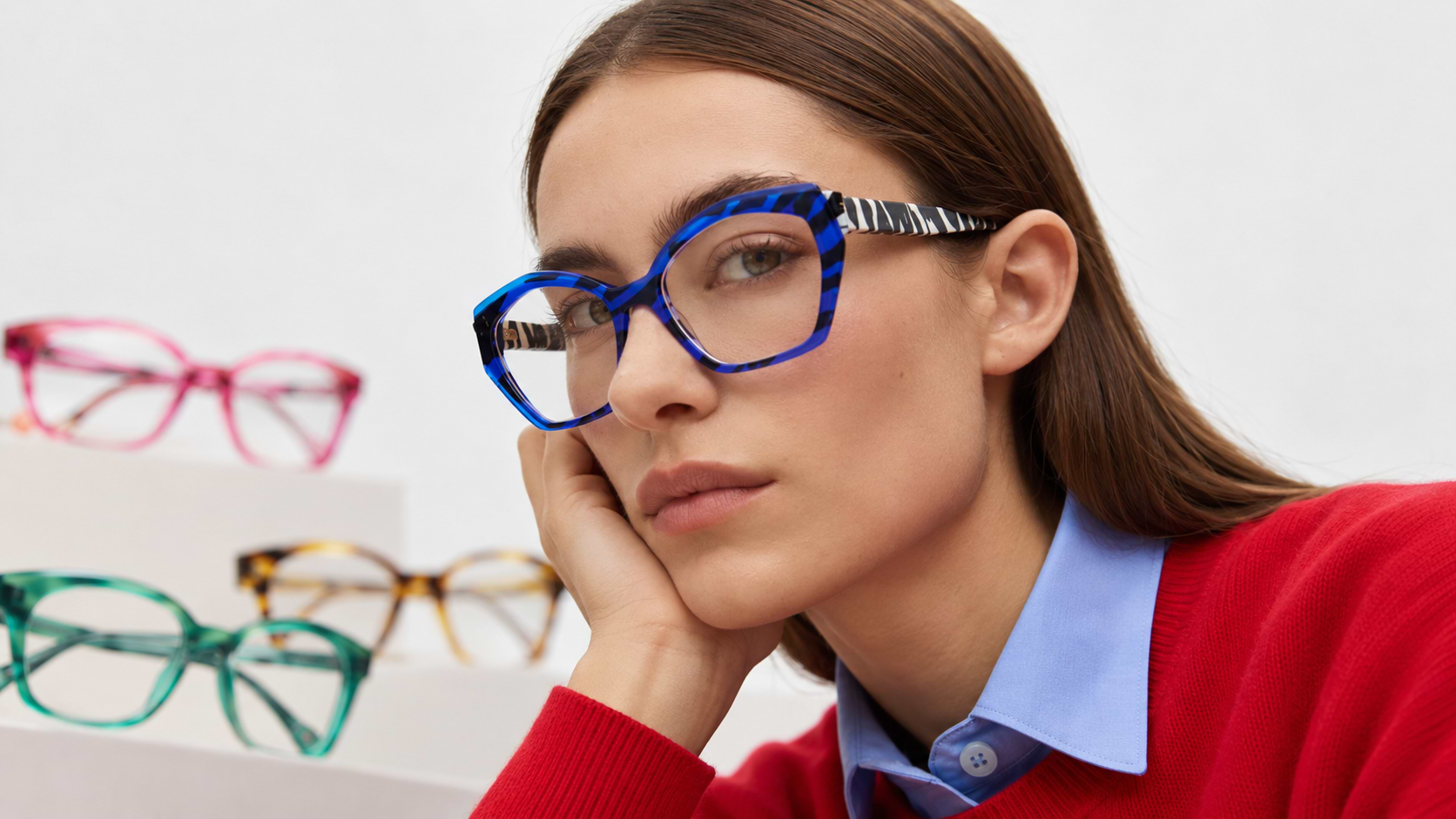
The best choice is rarely about chasing the loudest color in the room. It is about finding a hue, silhouette, and material that feel intentional on your face - and practical enough to wear from the first meeting to the last dinner reservation.
Why Color Belongs in Your Everyday Frames
Eyeglasses sit at the center of the face, closer to your expression than a handbag, shoe, or piece of jewelry. That placement makes color unusually powerful. A saturated frame can bring warmth to the complexion, sharpen the eyes, or give a familiar wardrobe a new rhythm without requiring a complete style overhaul.
For women who wear prescription glasses every day, choosing color is also a way to reject the idea that vision correction must look discreet. A frame can be refined without being quiet. Deep emerald acetate reads polished with tailoring. A raspberry cat-eye can feel cinematic rather than sweet. Transparent lilac or smoke gray offers color with a softer, more architectural effect.
There is a practical upside, too. A distinctive frame is easy to find in a crowded bag or on a hotel nightstand. More importantly, when you genuinely love how your glasses look, you are more likely to wear them with confidence instead of treating them as something to take off for photos.
Choosing Colorful Eyeglass Frames for Women
Start with contrast, not rigid rules about what you are "allowed" to wear. Traditional color advice often reduces the decision to hair color or eye color. Those details can help, but skin undertone, wardrobe preferences, and the degree of visual contrast in your features matter more.
If your coloring is high contrast - dark hair with fair skin, for example, or bright eyes against deep skin - a clean, saturated frame can look especially striking. Think ink blue, cherry red, black with a vivid interior, or geometric color blocking. If your features have softer contrast, transparent acetates, warm amber, dusty rose, olive, and gentle gradients can add dimension without overpowering the face.
Your closet should have a say as well. Someone who lives in charcoal, ivory, navy, and camel may find that a jewel-tone frame becomes a versatile signature. Someone who already wears print, bright knitwear, or sculptural jewelry may prefer a clear frame with a surprising colored edge. The goal is not to match every outfit. It is to choose a frame that speaks the same visual language.
Let your lipstick and jewelry guide you
A simple shortcut is to notice the colors you repeatedly choose elsewhere. If you reach for berry lipstick, garnet earrings, or warm gold jewelry, frames in wine, red, honey, or tortoiseshell may feel immediately natural. If silver jewelry, cool neutrals, and crisp white are your constants, cobalt, violet, icy transparent gray, and blue-green acetate can create a more coherent effect.
This is not a rulebook. A warm red frame can be extraordinary with cool-toned skin precisely because the contrast is deliberate. The difference is whether the color looks chosen or accidental. Try it on in daylight before deciding.
Shape Still Does the Heavy Lifting
Color gets attention, but shape determines how a frame changes the face. The most successful colorful frame is one whose proportions work before the pigment even enters the conversation.
Soft round and oval shapes can balance more angular features, while rectangular frames bring structure to rounder cheeks. A lifted cat-eye can add direction around the eyes, especially when the upsweep is subtle and the brow line does not sit too high. Oversized squares create presence, but they need enough cheek clearance and a bridge fit that keeps the frame from sliding down.
Do not choose a shape only because it is trending. A thick acetate rectangle may look magnificent in a campaign image yet feel heavy if you have a narrow bridge or low cheekbones. Conversely, a bolder frame can look surprisingly light when it is well balanced across the brow and temples.
The bridge is where many otherwise beautiful choices fail. If frames tend to slip, pinch, or sit against your cheeks when you smile, ask about fit options rather than assuming color is the problem. A good optical adjustment can transform the experience, but the frame must begin with a workable fit.
Acetate Makes Color More Interesting
Not all colorful eyewear is created with the same visual depth. Handcrafted natural acetate gives color a richness that painted plastic rarely achieves. Layers, translucency, marbling, and unexpected combinations can be worked directly into the material, so the frame has dimension from every angle.
That depth matters with strong hues. A flat primary red can feel costume-like; a red acetate with subtle variation, transparent edges, or a contrasting core feels more considered. The same is true of tortoiseshell. It is not one color but a spectrum of honey, espresso, olive, red, or blue that can make a classic silhouette feel distinctly personal.
Etnia Barcelona approaches acetate as a design surface, using saturated color and art-led references to make frames feel less like standard optical equipment and more like wearable objects with character. That kind of material-first approach is worth seeking when you want color that holds up beyond a single season.
Build a Frame Wardrobe, Not a Compromise
One pair does not need to perform every role. If you wear glasses daily, it can be more useful to think in terms of a small frame wardrobe than to search for one perfectly neutral compromise.
A rich, versatile color such as dark green, transparent brown, navy, or burgundy can anchor workdays and formal settings. Then a brighter pair - citrus, electric blue, pink, or graphic two-tone - can shift the mood for weekends, travel, creative events, or the days when your outfit needs very little else.
This approach also makes prescription decisions easier. If you have a stronger prescription, a slightly thicker acetate rim may help integrate lens edges more elegantly than a very thin metal frame. For screen-heavy schedules or changing light conditions, lens technology deserves as much attention as the front color. Photochromic lenses can reduce the need to switch pairs outdoors, while polarized or HD options may suit specific visual needs and lifestyles.
The trade-off is simple: a statement pair may not be the frame you reach for with every print or formal dress code. But it does not have to be. Versatility is not the same as invisibility.
How to Try a Bold Frame Without Second-Guessing It
Virtual try-on is useful for narrowing a large field, especially when comparing several colors in the same shape. Use it to judge scale, brow alignment, and whether a saturated hue brightens your face. Then, whenever possible, assess the frame in natural light and from more than one angle.
Give yourself a few minutes in the frame. Look down as if reading. Smile. Turn your head. Notice whether you are seeing the glasses first or whether they begin to look like part of you. The first reaction to color can be surprise, particularly if you have worn black or wire frames for years. Surprise is not a warning sign. Discomfort is.
A useful test is to imagine wearing the frame on an ordinary Tuesday, not only at a gallery opening or on vacation. If it still makes you stand a little taller, it has earned its place.
Colorful eyewear does not ask you to become someone else. It gives the version of you that already notices art, texture, architecture, and detail a clearer place to show up - right at eye level.