
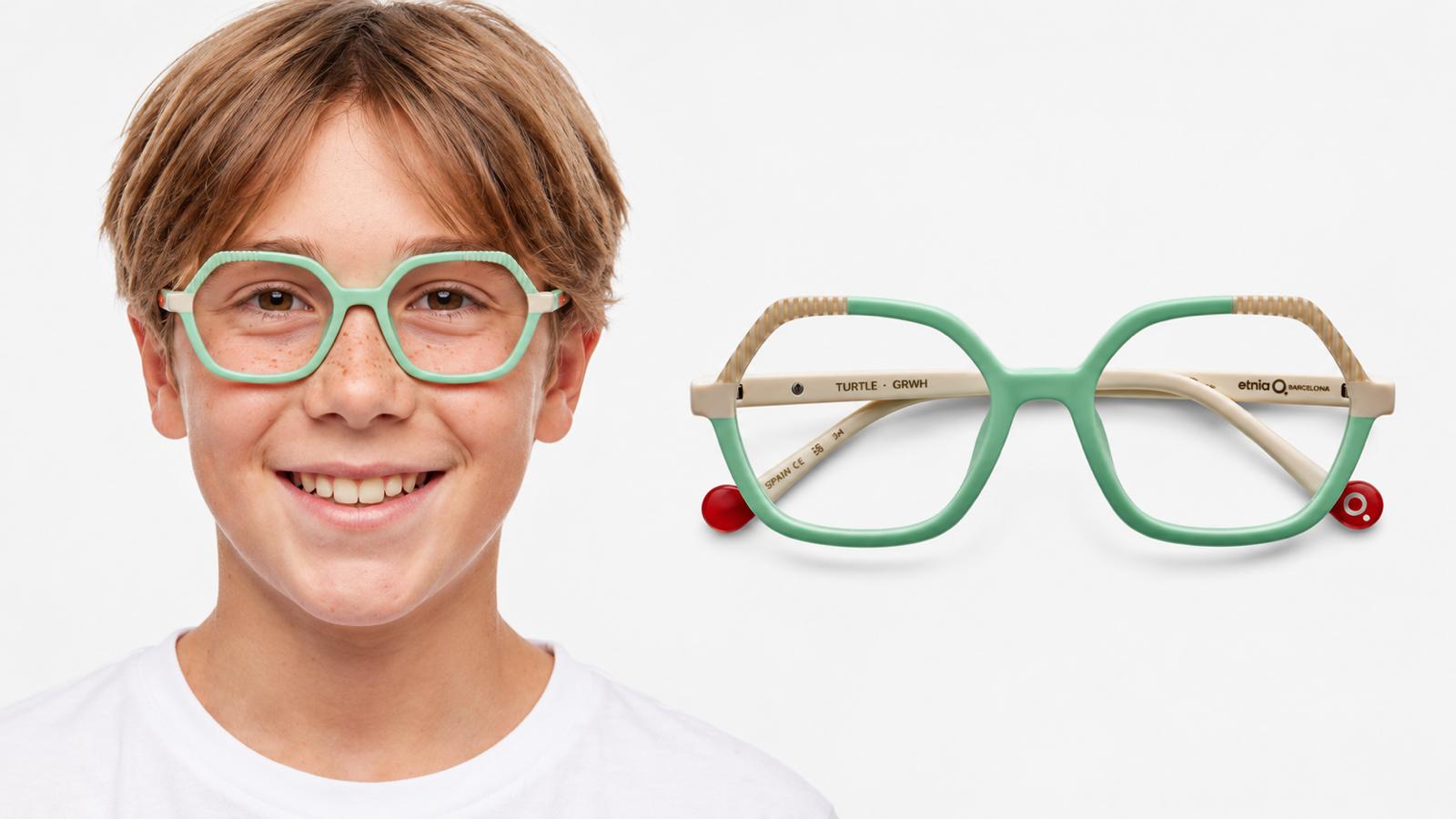
A backpack, a fast playground turn, a crowded desk, a sleepy car ride home: kids’ frames have a full schedule. Durable kids prescription glasses need to handle that movement while still feeling good enough to wear from first bell to bedtime. The goal is not a frame that looks purely practical. It is one with a secure fit, considered construction, and a color or shape a child is genuinely happy to put on.
What durable kids prescription glasses need
Durability is not one feature. It is the combination of material, fit, hinges, and everyday care. A well-made frame should feel substantial without weighing heavily on a young face. It should sit securely at the bridge, hold its position around the ears, and stand up to the ordinary twists and knocks that come with being a kid.
It also needs to suit real life, rather than an imaginary version of it. A child who moves from art class to soccer practice may need something different from a child who reads, draws, and carries their glasses carefully in a case. There is no single “best” frame for every child. The right choice balances their routine, their comfort, and their sense of style.
A durable frame is not an indestructible one. Even carefully crafted eyeglasses can be scratched, bent, or misplaced. Choosing quality construction gives the frame a stronger foundation, while a few simple habits help it stay in great shape.
Start with the material and construction
Material shapes both the look and the daily feel of kids’ optical frames. Handcrafted natural acetate has a distinct advantage for families who want color, depth, and personality rather than a flat, generic finish. The material can create rich tortoiseshells, clear tones, bright primaries, and unexpected color combinations that make glasses feel like part of an outfit.
Acetate also allows for sculpted silhouettes and a smooth finish against the skin. A frame with enough presence can feel secure and intentional, but it should never feel oversized or cumbersome. The best proportion depends on the child’s face, not simply their age.
Look closely at the hinges, too. These small working parts do a lot over the course of a school year. Hinges should open and close cleanly, with a finish that feels carefully assembled rather than loose or rough. Frames should also have neatly finished edges, even temples, and a front that sits level when placed on a flat surface.
There is a trade-off worth recognizing: a very lightweight frame may feel almost invisible, while a more substantial acetate design can bring extra visual character and a grounded feel. Neither approach is automatically better. Comfort and fit decide the issue.
The details that make a difference
A good kids’ frame does not need decorative excess to be expressive. Consider a slightly rounded panto shape in translucent blue, a compact rectangular frame in warm red, or a classic silhouette with a surprising laminated color at the edge. These details make the glasses feel chosen, not assigned.
That emotional connection matters. When kids like how their glasses look, they are more likely to treat them as their own and wear them consistently. Color can be confident, playful, quiet, or artistic. It gives a child room to show who they are without asking them to wear the same frame as everyone else.
Fit is where durability becomes practical
Even the strongest material cannot compensate for a poor fit. Glasses that slide down constantly are more likely to be pushed up by the lens, dropped, or left on a desk. Frames that pinch at the temples can become a distraction. A balanced fit supports everyday wear and reduces the rough handling that often follows discomfort.
The frame front should sit comfortably across the face, without extending dramatically past it. The bridge should rest securely, and the temples should follow the head comfortably toward the ears. A child should be able to look down at a book or run across the playground without constantly adjusting their frames.
Because faces vary widely, measurements are useful starting points, not final answers. Virtual Try-On can help families visualize scale, color, and overall proportion before narrowing the choices. For prescription optical frames, an authorized optician can help complete the purchase and make fitting adjustments when needed.
At Etnia Barcelona, optical frames can be purchased online or reserved without payment and sent to an authorized optician. That gives families a practical way to explore design-led options while keeping the final fitting experience where it belongs: with a professional who can assess the frame on the child.
Choose a style with room to grow
Kids change quickly, but that does not mean their glasses need to be visually anonymous. A frame that feels right now can still have enough range for the next school photo, the next family trip, and the next favorite jacket. Timeless shapes in expressive colors often strike that balance well.
For a child who prefers a quieter look, look for deep navy, olive, honey, or subtle translucent acetate. For a child who treats getting dressed as a creative event, brighter tones and bolder outlines can be the better fit. The frame should complement their personality, not tone it down.
Avoid choosing solely by what seems most grown-up or most practical at first glance. A pair that is technically suitable but never gets worn is not a successful choice. Invite the child into the decision, then guide the final selection with fit and construction in mind.
Make everyday care part of the routine
Durable kids prescription glasses last longer when care is simple enough for kids to remember. A hard case is useful for backpacks, sports bags, and travel. Encourage children to place glasses in the case rather than on a bed, a cafeteria tray, or the bottom of a backpack.
Cleaning is another small ritual with a large payoff. A clean microfiber cloth helps keep lenses and frames looking their best. Frames should be picked up with two hands when possible, instead of pulled off from one temple. These are not rules to make eyewear precious. They are easy habits that let a favorite pair stay part of the daily routine.
If a frame begins to sit unevenly or feels loose, resist the temptation to bend it back at home. An authorized optician can inspect the fit and make appropriate adjustments. Small maintenance checks can help preserve both comfort and the frame’s intended shape.
A frame they will want to wear tomorrow
The most durable choice is often the one that earns a place in a child’s life. It feels comfortable during class, stays put during movement, and brings a little color to the mirror each morning. Choose a frame made with care, fit it thoughtfully, and let your child choose the detail that makes it unmistakably theirs.